Thursday, December 4, 2014

Science Stations, Bullying, and Friendship

Science Experiment: Concave and convex surfaces that reflect light.
On the back of a spoon, your reflection is upside down!
Experiment: Can light bend around corners?
With Mrs. Schneider this week, students continued learning about Light in Science. In groups of 3 or 4, they rotated through 6 learning stations where they completed experiments to learn about how light travels, how light behaves, what our eye sees, and what our brain perceives. These were 2 rich, learning times where we all had a lot of fun.
Writing and reading secret messages
with a mirror (spelled backwards).
Optical Illusions: What do you see?


In Language Arts, we continued with our novel study, connecting the story to our own experiences through writing and drawing.

In Art, students completed beautiful watercolour and oil pastel winter art scenes that are on the bulletin boards outside of our classroom.


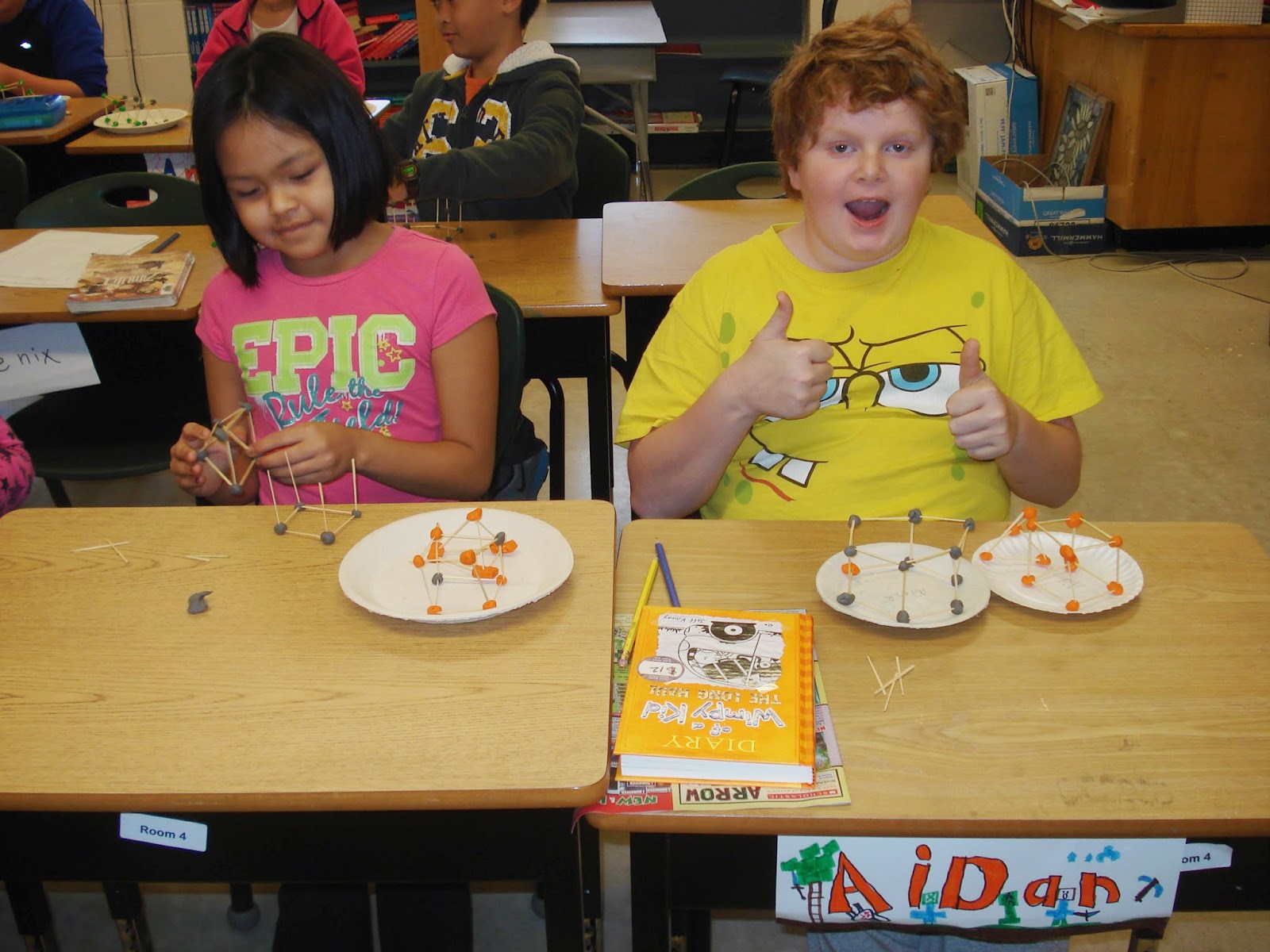
In Math, we sorted 3D solids by common attributes. Through hands-on lessons, students are learning to identify the names of 3D solids, and describe their faces, vertices (corners), and edges (sides), as well as understand how they are constructed.

We also discussed and learned about the difference between someone bothering you and bullying, how to deal with conflict with other students if using your WITS isn't working, and how to be a good friend. Ms. Beaulac, our Youth and Family Counsellor, also came to talk to our class about her job and how she helps students.

This topic ties in well with our novel study, where 5 students are on a sailboat for a month and must learn how to cooperate peacefully together.

As Mr. W said, great work this week!

Mrs. Schneider

Report Cards, Letter Grades, Library, A Lock down drill


Notices:
  

Great Job School!
 We collected 1 thousand 4 hundred 80 granola bars.
Scholastic book orders due tomorrow

Yes it is true:  If your child received a C+ it means they are perfectly meeting grade 4 expectations in all ways.  I find that this first report card, with actual letter grades, can be quite hard on many of the students who do not connect their daily work habits with their letter grade.  B's and A's mean they go beyond grade level expectations.  The first report card is a starting point and it is more important to work to improve from now until the final report card in June. Grade 4 is the step from primary to intermediate and students are now expected to produce better, greater and more  polished work than in the primary grades.


We began the day as usual with silent reading.  Silent reading is a great time for those students who love to read.  To start the day in a fantastic world somewhere in time sets the students creative brains on fire.  Those reluctant and slow to get to reading students, with daily reading will one day find the perfect type and level of books for them, if they go beyond their comfort level of Captain Underpants, or Dr. Seuss.  When they do they may find they have a lifelong love of reading that will enrich their lives now and forever.


At 9:30 we had our library tech class with Mr. K in the Library/computer lab.  Mr. K is currently reading stories from across Canada.  Today he talked about the Northern Tlingit people and read a fable about raven.  

After recess we continued with our discussion from yesterday on how to treat people, on what they wanted to be remembered for, again using the Sneetches video from yesterday.

At 11:00 we had a Lock down drill where we had to sit silently away from the doors, windows closed and doors locked.  The community police liaison came in and said we had done an excellent job. When the door was knocked on, during the drill, no one called out.   Well done everyone and let's hope that you never have a real lock down drill in your life.


In math we looked at number reading, placement and reading large numbers.  Ask your child to show you how to read large numbers to see if they got it.  Write a number up to the tens of millions.  Or just have them explain what the red numbers are.

12 345 678

(at the start of the lesson many students said the red 4 was millions, reading the number and it's place value from right to left as such.... ones, tens, hundreds, thousands, millions ... in fact the number is tens of thousand .... and after ones of thousands should be read as tens of thousands, hundreds of thousands, ones of millions, tens of millions etc.)


Great day and well done everyone. See you tomorrow for a new day of work that will begin to be used for next report card.  Test tomorrow is Spelling and explaining what is supposed to happen during a lock down drill and why. Take care Mr. W.

P.S. Please take extra time hand washing as many classes have students sick and away.


Wednesday, December 3, 2014

Dr Seuss, Being popular, Being remembered, PE, Environments and Choir


Notices:  
Granola bar service project wraps up tomorrow


Our class is making the train cars for the Granola bar drive


We began after recess with ME.  We talked about, then the students wrote a one page report to answer three questions: What makes someone popular? What do they think they will be remembered for?  And what do they want to be remembered for?  We will look at the students answers another day and do follow up.  After the students had been writing for 20 minutes I showed the dr. Seuss movie the Star Bellied Sneetches.  


In The Sneetches, by Dr. Seuss, some Sneetches had green stars on their bellies while others did not. “Those stars weren’t so big. They were really so small. You might think such a thing wouldn’t matter at all.” However, the stars served as a source of discrimination until Sylvester McMonkey McBean came to town with a machine to add and remove stars, forcing the Sneetches to question their differences.


The Sneetches by Dr. Seuss is excellent for discussing issues of prejudice and discrimination with children. When the Star-Bellied Sneetches and the Plain-Bellied Sneetches treat one another disrespectfully because of simple stars on their bellies, one is forced to question the absurdity of such prejudice. Though most people would agree that discriminating based on stars on a creature’s belly is silly, we can come to a better understanding of the nature of prejudice and discrimination through discussing questions of metaphysics.


After lunch we read for 10 minutes then went to P.E. where we played a rousing, hopping, dipping, diving and dodging game for 30 minutes.  

After P.E. we talked about what an environment was.  The students gave many ideas to begin to understand the concept of an environment includes all living and non living parts of an area.  We will write and talk about this concept tomorrow as we did not have time to finish our discussion and write.  Hopefully tonight students will think further about the question and add more insightful comments.

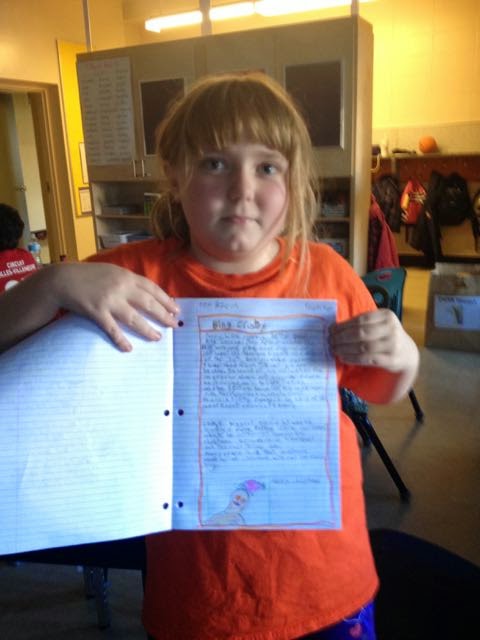
At 2:00 the students not in choir listened to and did a one page report on Bing Crosby, one of America's most popular entertainers of all time. Bing Crosby sang such hit songs as the ever-popular holiday classic "White Christmas." 


From there we cleaned up, played a game of Simon Says then headed home.  Great day everyone.


Sunday, November 30, 2014

3D Structures, Granola Bar Train, and Thomas Edison

Reminder: Skating on Tuesday, December 2.

Please bring your helmet, gloves, and warm clothes.

Students from our Buddy Class painting the Granola Bar Train
 
Our school, along with the Q Radio Station, is collecting granola bars to be donated to families in need in December. If you have a spare granola bar, please bring it to school and we'll put it into our Granola Bar Train in front of Mrs. Dagg's room.


With Mrs. Schneider this past week, students started a novel study on Shipwreck by Gordon Korman. This is the first book in the Island trilogy about 5 kids who are sent on a month long trip on a sailboat because of their undesirable behaviour. A storm hits and ... you'll have to ask your child about what happens next in the story.

In Math, we built 2D shapes and transformed them into 3D geometric structures, and learned the names of 3D solids. We also completed a Geometry Scavenger Hunt with a partner in our classroom.


In Science we started a Sound and Light unit. We learned about Thomas Edison, who invented more than 1000 items, including the telegraph machine to use with Morse code, the phonograph that plays music, the light bulb, a battery to power electric cars in 1909, and submarine sonar.


We also learned about our eye and how optical illusions work. We will continue with light and optical illusions this coming week.
 
Mrs. Schneider